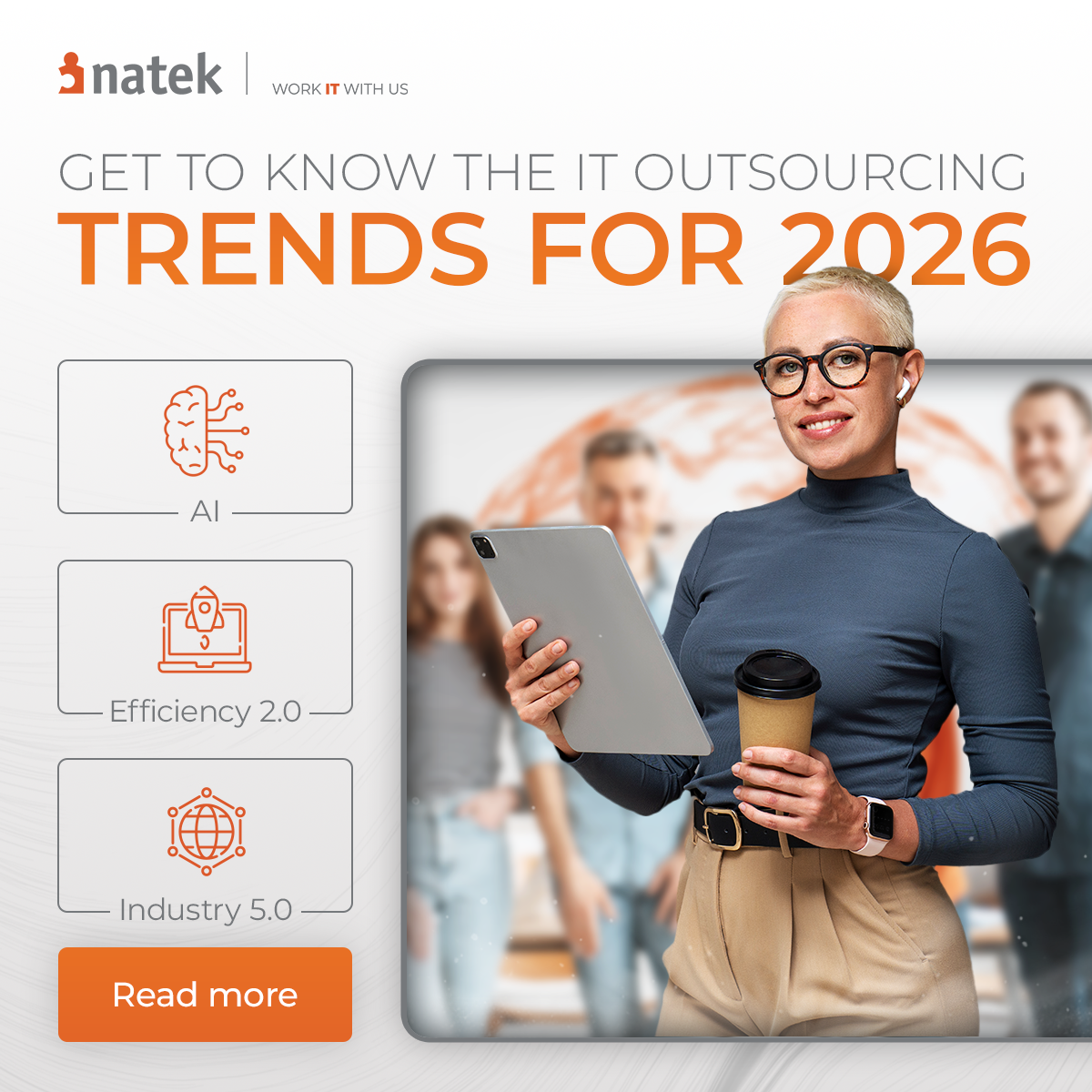


The IT outsourcing industry in 2026 looks very different from the one companies relied on just a decade ago. What was once driven primarily by cost reduction is now shaped by intelligence, flexibility, and long-term value creation. The need for flexibility and scalability in response to market demands is also driving the trend of outsourcing, making it a strategic lever for business growth and digital transformation.
Labor shortages in the IT sector are pushing companies to seek outsourcing solutions to access specialized skills and maintain competitiveness. As enterprises accelerate their digital transformation, outsourcing partners are no longer expected to simply “deliver code” or staff projects quickly. Instead, they are becoming strategic collaborators, bringing technological expertise, business understanding, and the ability to scale innovation at speed. Current industry trends emphasize AI, automation, low-code solutions and specialized skills, which are shaping software development outsourcing trends to help organizations innovate faster, optimize resource allocation, and drive business growth.
AI Has Grown Up: From Buzzwords to Backbone
For many industry veterans, today’s AI-driven landscape feels familiar, yet far more mature.
“The IT landscape of 2026 feels remarkably familiar to me and to those of us who navigated the cloud boom of 2016. What was once a collection of buzzwords has matured into the backbone of global enterprise strategy. Since 2025, our discussions have shifted from ‘What is AI?’ to ‘How fast can we scale it?’ The future of outsourcing isn’t just about providing resources; it’s about providing the intelligence to manage them. While AI handles the volume, humans provide the value.”

Currently, 59% of IT outsourcing is centered on AI and machine learning consulting, with AI-driven co-pilots streamlining software development outsourcing processes and boosting productivity.
One of the most significant shifts is the rise of Agentic AI - autonomous systems capable not only of recommending actions but also of executing them across entire workflows. Predictive analytics and data-driven decision-making are now essential components of modern IT outsourcing, supporting risk management and enabling companies to make informed, strategic choices. These agents are now embedded in sales operations, HR processes, IT service management, and customer support.
Self-healing IT architectures are becoming the norm, automatically scaling resources, detecting anomalies, and resolving incidents in real time. As AI systems handle sensitive business data, the importance of data protection, data security, and regulatory compliance has grown, ensuring that organizations safeguard information and meet industry standards. This reduces downtime, limits human error, and fundamentally changes how outsourced teams operate and deliver value. The growing importance of AI governance and 'human-in-the-loop' models ensures accountability and control over AI outputs as businesses demand greater oversight.
Efficiency 2.0: The Age of Digital Labor and Outsourcing Services
While efficiency has always been a driver for outsourcing, its meaning has evolved. In 2026, organizations are not just searching for cheaper labor, they are investing in digital labor. Robotic process automation (RPA) and intelligent automation are now leading trends in IT outsourcing, enabling companies to automate repetitive tasks, improve operational efficiency, and reduce operational costs.
AI models have moved beyond advisory roles and are now actively participating in software development, testing, infrastructure management, and customer service. Companies outsource various IT functions to reduce operational costs, enhance adaptability - especially during economic downturns - and streamline processes. This shift allows companies to automate repetitive administrative and even technical tasks, unlocking measurable cost savings and improving service delivery.
Those savings are rarely pocketed. Instead, they are reinvested into innovation, advanced architectures, and highly specialized senior talent, reshaping the talent pyramid within outsourced teams.
Industry 5.0: Human-Centric Outsourcing
Despite the rapid automation of processes, 2026 is not about replacing people. It’s about augmenting them. IT outsourcing provides access to specialized skills and expertise that may not be available internally, often through staff augmentation. This approach enables companies to source niche talent and fill critical gaps in specialized fields, ensuring quality, innovation, and operational continuity without the expense of full-time staff.
Human-AI collaboration (often referred to as Industry 5.0) focuses on synergy rather than substitution. By outsourcing routine IT operations, internal teams are freed up to focus on core business functions, core competencies, and strategic initiatives such as innovation, product development, and customer-centric activities. External providers handle specialized or repetitive tasks, allowing companies to concentrate on their core business operations and drive overall business performance.
Co-bot models, where AI works alongside engineers, analysts, and business specialists, are now standard in complex problem-solving environments.
Low-code platforms are increasingly becoming part of this co-bot ecosystem. Acting as digital co-workers, low-code tools enable faster collaboration between business users and technical teams by simplifying application development, workflow automation, and system integration. When combined with AI capabilities, low-code accelerates prototyping and iteration, reduces time-to-market, and allows human expertise to be applied where it creates the most value - strategic thinking, design, and decision-making - rather than repetitive development tasks.
Digital Twins are another key pillar, especially for industrial and manufacturing clients. These AI-powered virtual replicas allow organizations to simulate scenarios, optimize processes, and test innovations in real time, leading to more sustainable, resilient, and adaptable operations.
Value Over Volume: A New Expectation for Partners
The changing role of outsourcing partners reflects a broader shift in business priorities. IT outsourcing offers significant advantages, including digital transformation, cost savings, and access to skilled talent, making it a strategic choice for organizations seeking to stay competitive.
“Modern business is clearly moving away from simple cost savings toward real technological value. AI, machine learning, and data science projects are no longer experiments. They are a key part of growth strategies. That’s why the demand for partners who combine strong technical expertise with deep business understanding is growing. Simply delivering code is no longer enough.”

When selecting an outsourcing provider, companies should prioritize service quality over low cost, ensuring that the partner can meet performance standards and support business objectives. Evaluating potential outsourcing vendors and outsourcing service providers should include checking their experience with similar projects and their ability to deliver high-quality service delivery. Regular performance monitoring, transparent communication, and building trust are key factors in establishing strong partnerships and ensuring alignment with business goals. Companies must also conduct a thorough internal analysis before committing to an outsourcing model to avoid misalignment and quality concerns.
Flexibility has also become a decisive competitive advantage. In an environment of rapidly changing project requirements, the ability to scale teams quickly and secure specialized experts on demand often determines success in high-stakes initiatives.
Bulgaria’s Rise as a Strategic Outsourcing Hub
Geography continues to play a crucial role in outsourcing, and in 2026, Bulgaria emerges as a strategic hub for European and global clients. According to our 2025 CEE Report, Bulgaria has made significant advancements with the launch of two supercomputers, Discoverer and Hemus, valued at EUR 12 million and EUR 15 million respectively, enhancing its position in Central and Eastern Europe for advanced research capabilities. Additionally, Bulgaria has developed its own AI model, BgGPT, backed by EUR 114 million in funding, positioning it as a competitor to models like GPT-4. The country is also advancing regulatory frameworks for blockchain technology, fostering innovation in cryptocurrency and digital transactions. The growing preference for nearshore outsourcing is driven by its cost-effectiveness, access to skilled labor, and improved time-zone alignment. Companies increasingly adopt nearshoring to leverage proximity and cultural compatibility, which have become top priorities in IT outsourcing amid geopolitical uncertainties. Alongside nearshoring, onshore outsourcing is gaining traction as a strategic alternative.
“With Bulgaria’s formal adoption of the Euro on January 1, 2026, financial integration with the EU will simplify cross-border operations and strengthen investor confidence. At the same time, AI and automation adoption is accelerating, supported by initiatives like the new EU-backed AI factory in Sofia.

Beyond traditional IT services, Bulgaria is also developing strong ecosystems in space technology and aerospace innovation, backed by government policy, research institutions, and emerging industry clusters. This diversification further strengthens its position as a long-term outsourcing and nearshoring partner. Many outsourcing companies in Bulgaria like NATEK deliver significant cost savings, provide 24/7 support, and offer managed services, which are essential for meeting the increasing demand for IT outsourcing.
From a delivery perspective, expectations have also evolved.
“In 2026, outsourcing in Bulgaria is less about cost and more about reliable delivery and long-term partnership. Clients expect teams that take real ownership - understand the business, make technical decisions, and deliver end-to-end products, especially in areas like cloud platforms, data, AI, and scalable product development.”

While our CEE Report 2026 edition is still in the works, please check our 2025 edition for more in-depth view about Bulgaria's IT market.
The New Gold Standard for IT Talent
Across all regions, the definition of qualified IT talent has fundamentally changed. AI literacy is now a baseline requirement, not just for developers, but for service desk specialists, project managers, and people leaders. Accessing global talent has become essential, with business process outsourcing (BPO) and business processes playing a key role in meeting diverse business needs and driving operational efficiency.
Senior expertise is more valuable than ever, ensuring that automated systems align with business goals, regulatory requirements, and ethical standards. There is a growing demand for managed services that support complex multi-cloud environments, including cloud computing, cloud services, and cloud infrastructure management, as organizations seek scalable, flexible, and cost-effective IT solutions. The integration of advanced data analytics and emerging technologies such as AI and machine learning is transforming IT outsourcing, enabling innovation and efficiency across industries. Additionally, green software development practices are being adopted to optimize applications for reduced energy consumption, and Environmental, Social, and Governance (ESG) criteria are now critical factors in vendor selection for IT outsourcing.
Choosing the Right Outsourcing Partner in 2026
As outsourcing becomes more intelligent, strategic, and human-centric, the choice of the right IT outsourcing partner and IT outsourcing company is more critical than ever, especially in light of the latest outsourcing industry trends and the rapidly expanding outsourcing market. Companies are increasingly leveraging outsourcing software development and software development outsourcing as key strategies for business process outsourcing and digital transformation, enabling them to focus on core business activities and drive innovation. With a wide variety of outsourcing services and services outsourcing models available, organizations can tailor their approach to best fit their needs and maximize operational efficiency.
Companies that succeed are those that collaborate with providers who prioritize business outcomes, ownership, and long-term value - not just capacity. If you’re considering outsourcing, contact us by sending a message to NATEK Sales Prospection Team Lead Andrzej Osman at [email protected], or fill out our contact form to begin our cooperation and #growITwithus.