

Cloud computing has revolutionized the way organizations access and manage their IT resources. At its core, cloud computing is a model that allows users to gain access to a wide range of computing resources—such as servers, storage, applications, and data analytics tools—over a network, typically the internet. Instead of relying on traditional client-server models or maintaining costly on-premises infrastructure, companies can leverage the cloud to deploy and scale resources on demand.
With cloud computing, users benefit from a flexible and scalable environment where resources can be provisioned and managed through a thin client interface or program interface, often with just a few clicks. This means businesses can quickly adapt to changing needs, whether they require additional data storage, more computing power for AI applications, or a robust application hosting environment for their own applications.
Introduction to Cloud Computing
Cloud platforms like Microsoft Azure, Google Cloud, and other leading cloud providers offer a variety of service models—ranging from infrastructure as a service (IaaS) to software as a service (SaaS)—enabling organizations to choose the right mix of cloud capabilities for their unique requirements. Whether operating in public cloud, private clouds, or hybrid cloud environments, companies can optimize resource management, improve cost effectiveness, and enhance disaster recovery strategies.
By embracing cloud computing, many organizations are able to innovate at their own pace, reduce operational costs, and focus on delivering high performance and secure services to their customers. As cloud environments continue to evolve, understanding how to estimate and manage costs becomes essential for maximizing the value of cloud services and ensuring long-term business success.
Estimating and Saving Cost with Azure Cloud Services
This guide is intended for IT professionals and business leaders seeking to understand and optimize their Azure cloud costs. Microsoft Azure is a flexible, scalable, and secure cloud computing platform provided through a global network of data centers. Estimating the actual costs of provisioning IT environments in Azure can prove to be complex, making cost control and optimization in cloud adoption a critical concern for organizations of all sizes.
Azure enables cost efficiency by allowing organizations to optimize spending and resource allocation. To put it simply, no matter what business you are in, and regardless of enterprise size, cloud computing offers measurable benefits at reasonable cost. Such benefits can not only increase profits but also inspire innovation. This article explains how to estimate and save costs with Azure cloud services. Azure also provides cost management tools, like Azure Cost Management, to help users monitor and optimize their spending.
Cloud solutions and their hidden costs
One of the most often-cited obstacles preventing cloud computing deployment and adoption in the enterprise is the uncertainty of cost—both in the initial cost of deployment and in the recurring cost of daily use. Microsoft is attempting to alleviate this common obstacle by providing a cost calculator for its suite of cloud computing solutions known as Azure, a cloud platform that provides a comprehensive set of services.
During your professional career there might be a certain moment when you face this task for the first time – how to explain to the customer how much money he is going to spend setting up infrastructure, on software licenses or developer tools. What to do when the client asks you: How much are we really going to pay yearly for the website? Several years ago, there were two ways to estimate it:
Estimating the cost at that point was not very complicated because most of the providers had their own pricing tables sorted by capacity with detailed fixed price per month or per year. It is important to evaluate different cloud vendors for cost and feature comparison to ensure the best fit for your needs.
Understanding these hidden costs is essential before exploring the potential risks of inaccurate cost estimation.
The cost of not getting it right
It’s true that nowadays, in the cloud computing age we deal with many distinct scenarios, providers and services, including multi cloud strategies to optimize performance and avoid vendor lock-in. That’s why we need to be careful when answering questions about cost estimation. What can happen when you don’t consider all the details and variables?
First steps in the cloud computing world with Azure can prove to be tricky. It is a part of developer’s DNA to always want to work with the latest technologies. That was definitely the case of solutions based on Azure cloud service when they first became available and popular several years ago. At that time, it was fun to work with cloud services. At the same time, as it happens with new services, you might have made some mistakes like not setting up the correct configuration. That would easily increase the cost of your service by even 50%. Not being aware of the tools provided by Azure could be quite costly.
Being aware of these risks highlights the importance of leveraging Azure's built-in tools for accurate cost estimation and ongoing optimization.
Azure tools that make it easier
Azure Advisor is a free service that provides personalized recommendations to help you optimize your Azure resources for cost, performance, and security.
Not having enough knowledge regarding estimating the cost of your service may lead to a situation where you run out of the budget. So…how to get the most accurate cost estimation? The two following scenarios are the ones we face when asked “how much does it cost?”:
Using the Azure Pricing Calculator
The first one is fairly easy because Azure provides a pricing calculator in which one is able to pick all services the solution requires and get the estimated cost. Of course, this cost can vary depending on many factors such as the date in which you buy the services, currency, instances of the services and the regions.
Managing cloud resources is crucial, and Azure tools help track and optimize them for better cost control.
Using the Total Cost Ownership Calculator
When we come across the second scenario, we have first to know all the details regarding the actual infrastructure working on our customer side. Once we have this information, we can take advantage of the Total Cost Ownership Calculator. This tool allows us to register our current configuration and it creates a comparison based on Azure Services to estimate how much we could save and spend using the cloud services.
Azure's cloud infrastructure supports scalable deployments, making it easier to align resources with business needs.
At this point, we can think that we are ready to present some valuable information to our customer or project manager and adjust our budget or project given this estimation. Is that enough though? It is actually possible that we opt for a service which is more than enough for us.
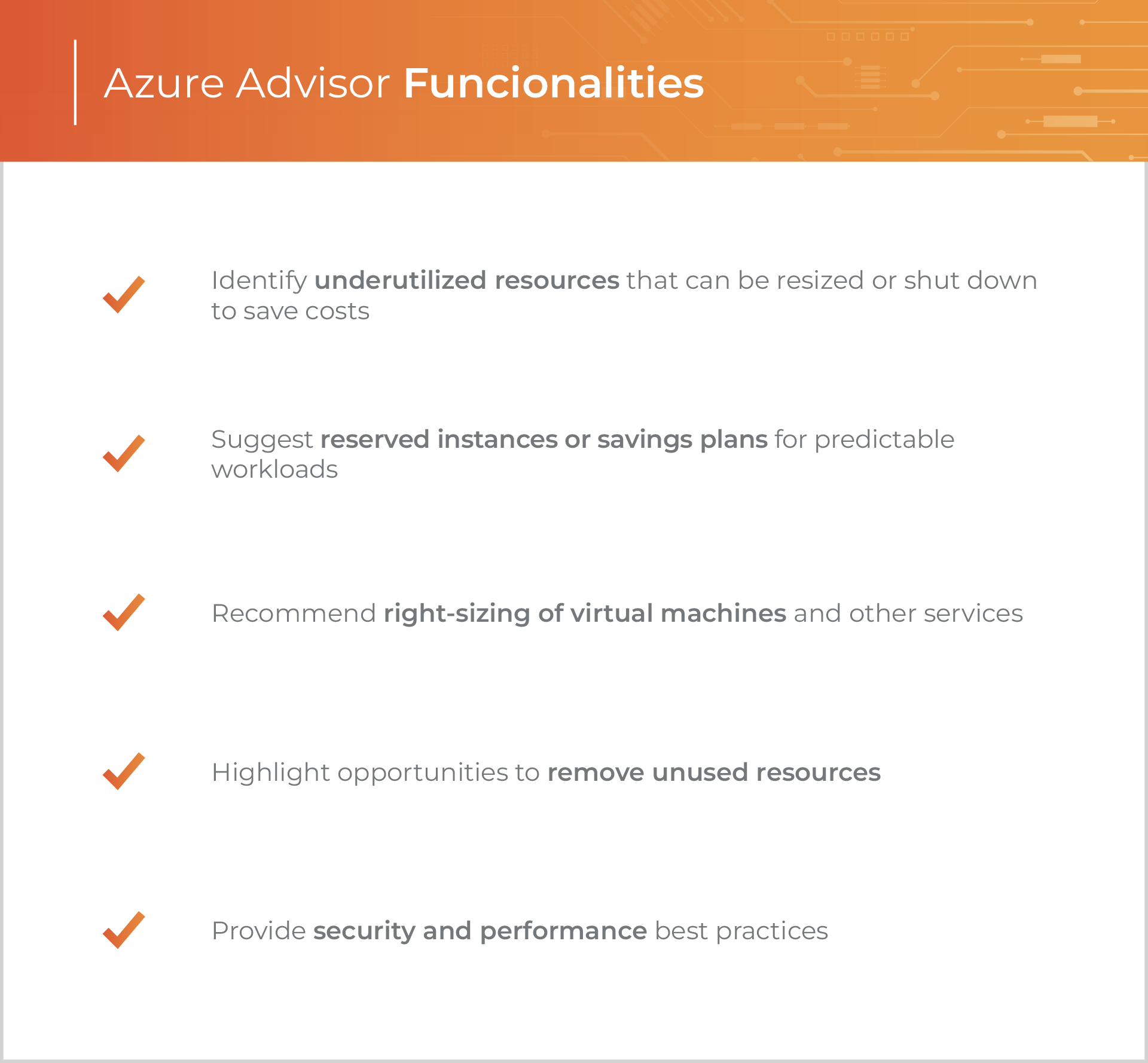
It is important to know that Azure also helps you find out on which services you can save money in case your configuration has more power than the one you really need. That useful tool is called Azure Advisor.
Based on your usage, Azure Advisor can help you with the following recommendations:
Save cost with NATEK Team
All in all, in many cases, enterprises can save money with cloud computing, but estimating cloud costs may be challenging at times. In order to avoid any surprises, it is extremely important to estimate the costs prior to migration. The shift from traditional IT environments, which relied on on-premises data centers and hardware, to cloud-based solutions like Azure abstracts much of the underlying complexity and capital investment.
When migrating to Azure, organizations can often minimize changes to application code, making the transition smoother for existing apps and cloud applications. Azure supports the development and deployment of a wide range of apps, including AI apps, SaaS applications, and cloud applications, leveraging its robust technology, programming languages, and tools supported. Users gain access to Azure services and environments, where they can manage select networking components, host firewalls, and possibly configuration settings to optimize cost and performance. Azure manages operating systems and virtual machines as part of its core infrastructure, ensuring security and compliance as a trusted service provider. Organizations may also leverage multiple public clouds and third party providers as part of their cloud strategy, taking advantage of individual application capabilities and even individual application capabilities managed by Azure.
By understanding and utilizing Azure's cost estimation and management tools, IT professionals and business leaders can ensure effective cost control and optimization throughout their cloud adoption journey. Go to our contact page or message our Sales Prospection Team Lead Andrzej Osman on LinkedIn or at andrzej.osman@natek.eu to tell us about your needs. Contact us and #growITwithus!